An Uncle Can Marry His Niece in Israel Under Jewish Law
| Claim: | An Uncle Can Marry His Niece in Israel Under Jewish Law |
|---|---|
| Rating: |
True

|
| Finding: | Jewish marriages in Israel are performed under Jewish law. Leviticus forbids a man marrying his aunt, not his niece. The Talmud and Shulchan Aruch permit a man to marry his brother's or sister's daughter. |
|
COMPLETE REDPILL(true) |

Claim: An uncle can marry his niece in Israel
Verdict: True.
The X post from @forbiddenmerch (August 24, 2026) asked @grok, “Can an uncle marry his niece in Israel?” Grok’s reply:
“Yes. Under Jewish law (which governs Jewish marriages via the Rabbinate in Israel), a man may marry his niece—his brother’s or sister’s daughter. The reverse (aunt-nephew) is forbidden. Genetic testing is commonly recommended today due to health risks.”
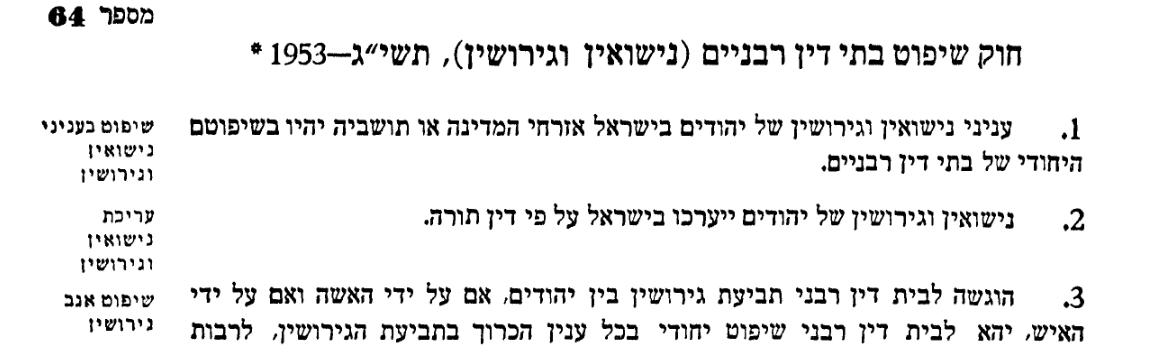
- Who marries Jews in Israel: There is no civil marriage track for Jews inside Israel. Section 1 of the Rabbinical Courts Jurisdiction (Marriage and Divorce) Law, 5713-1953, puts "matters of marriage and divorce of Jews in Israel, being nationals or residents of the State" under the exclusive jurisdiction of rabbinical courts. Section 2 says those marriages "shall be performed in Israel in accordance with Jewish religious law" (din Torah). The Chief Rabbinate runs that system on Orthodox halakha. If Jewish law permits the match, the rabbinate can marry them.
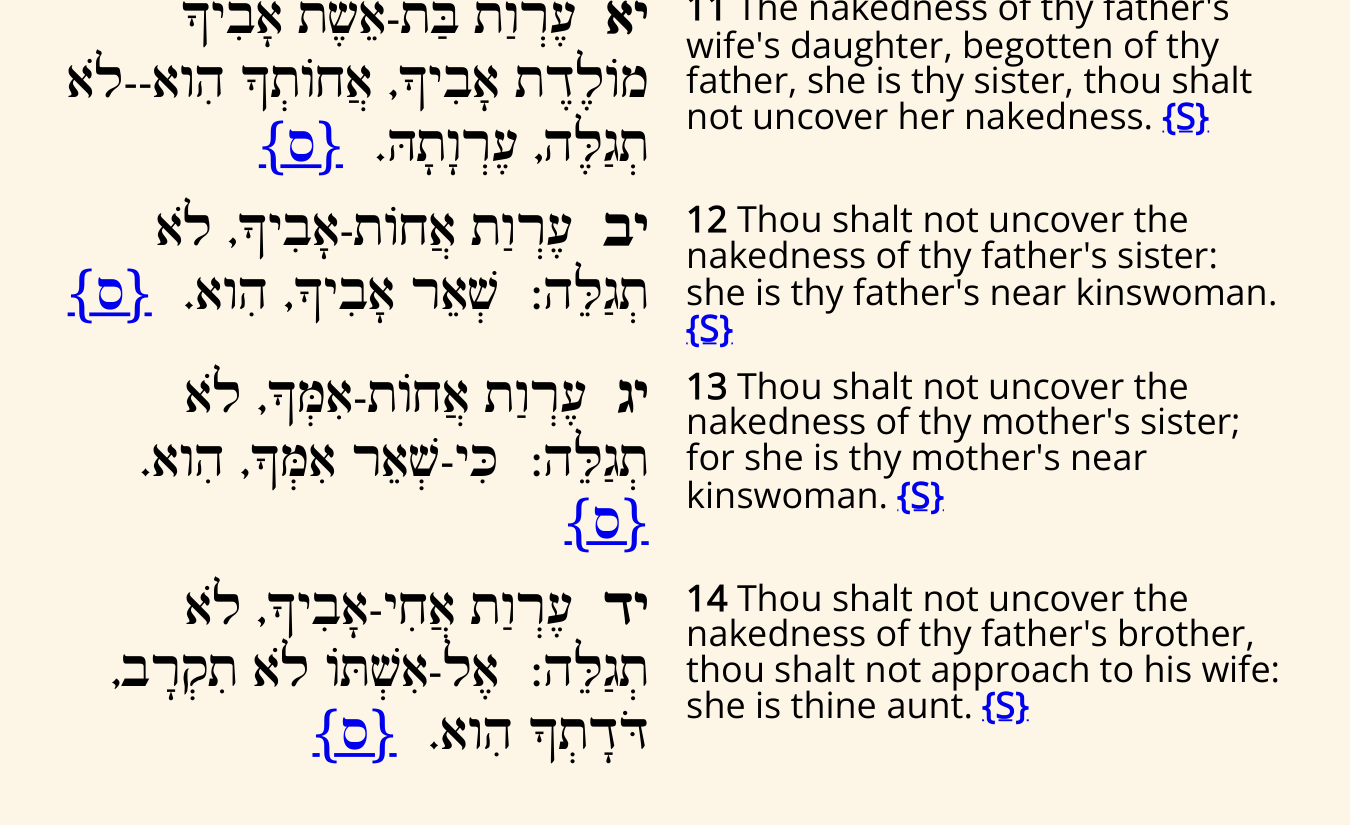
- The Torah list does not include a niece: Leviticus 18 is the main biblical list of forbidden sexual relatives. It bars a man from his mother, sister, granddaughter, father's sister, mother's sister, uncle's wife, daughter-in-law, brother's wife, a woman and her daughter, and his wife's sister while the wife is alive. Verses 12-13 forbid the aunt (father's sister, mother's sister). The list never names a brother's daughter or a sister's daughter. Encyclopaedia Judaica's "Incest" entry treats that biblical roster as exhaustive for criminal-grade incest in Jewish law, and says it "may not be added to by analogies."
- The Talmud treats it as permitted, and praises it: A baraita on Sanhedrin 76b (and the same teaching on Yevamot 62b-63a) lists "one who marries the daughter of his sister" with people who love their neighbors, draw relatives close, and lend to the poor in their time of need. Of that person, Isaiah 58:9 is applied: "Then shalt thou call, and the Lord will answer." The William Davidson / Steinsaltz English on Sefaria and the Soncino translation both have that line. The niece in the praise-text is the sister's daughter. Later codes extend the permission to a brother's daughter as well.

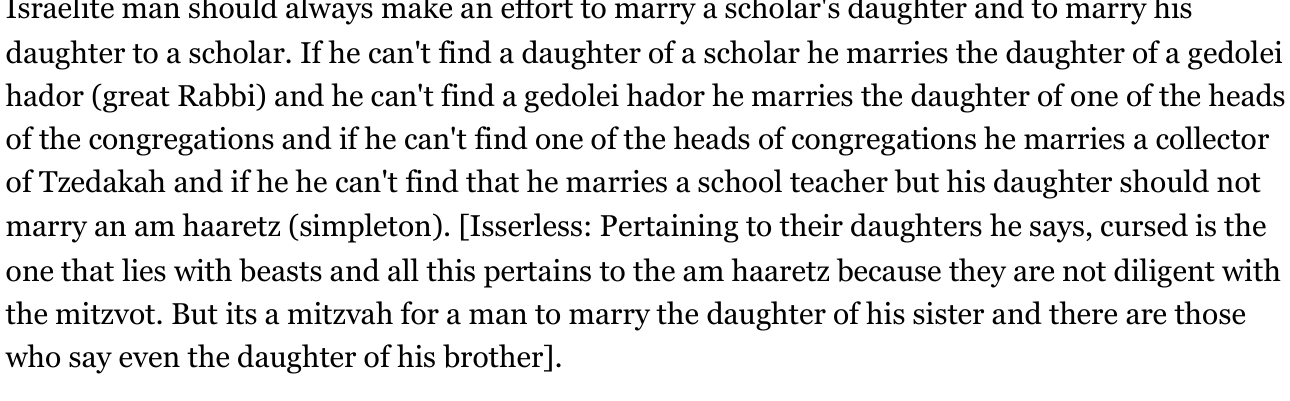
- The codes still permit both nieces: Maimonides, Mishneh Torah, Forbidden Intercourse 2:14, writes that a man may marry a woman and her sister's daughter or her brother's daughter at the same time, and that "it is a mitzvah from the Sages for a man to marry his sister's daughter," with the same law applying to his brother's daughter. The Shulchan Aruch, Even HaEzer 2:6, in the Rema's gloss, says "it is a mitzvah for a man to marry the daughter of his sister and there are those who say even the daughter of his brother." Even HaEzer 15:25, in the same gloss, says a man "is permitted to the daughter of his brother or sister, and it is a Mitzvah to marry her." Rashi and Rabbenu Tam preferred the sister's daughter as the praised case. The Rambam, Rashbam, and Rema treat the brother's daughter as permitted too. Grok's "brother's or sister's daughter" matches the codes that govern Orthodox practice.
- The reverse is forbidden: A nephew may not marry his aunt. That is Leviticus 18:12-13 and 20:19, restated in Even HaEzer 15:16 ("A man's father's sister and mother's sister are forbidden to him under Torah law"). Grok's "the reverse (aunt-nephew) is forbidden" is the biblical rule, not a modern add-on.
- Age still applies: Permission in Jewish law is not a waiver of Israel's Marriage Age Law, 5710-1950. Amendment No. 6 (2013) set the ordinary minimum at 18. A family court can permit 16- and 17-year-olds in special circumstances tied to the minor's welfare. Marrying, or helping marry, someone under the floor is a criminal offense. An uncle-niece wedding in Israel still needs two adults the state will register, or a court permit.
- Criminal law does not treat adult uncle-niece sex as incest: Penal Law, 5737-1977, section 351 covers sex offenses inside the family. "Family member" includes an uncle or aunt who is at least 15, but the statute then carves uncles and aunts out of the 351(b) "prohibited intercourse" offense when the other person is 16 or older. Consensual sex with a relative aged 21 or older is outside that incest section. Parent-child and similar close relations stay covered. The Knesset did not write a general adult uncle-niece ban.
- Genetic testing: Uncle-niece couples share more genes than first cousins. Contemporary rabbinic answers treat the match as still permitted and tell the couple to screen. Rabbi David Sperling on yeshiva.co wrote that an uncle may marry his niece today, that he personally knew such a couple, and that they "should certainly do genetic testing." Hidabroot's answer is the same: permitted, even a mitzvah, "check for any genetic issues." A 2021 medical-halacha review of the Tzitz Eliezer notes the codes still permit it and that genetic investigation is advised. Grok's "commonly recommended" line matches those sources. It is not a statement that the rabbinate always requires a specific test.
- Not every Israeli: The "yes" is for Jews marrying through the rabbinate, which is how Jewish Israelis marry inside the country. Muslim personal-status law in Israel is a different court. Quran 4:23 forbids a man his brother's daughters and sister's daughters, so a Muslim uncle-niece marriage is not the same rule. Christians and Druze use their own tribunals. Israelis who cannot or will not use a religious court sometimes marry abroad; the Interior Ministry then registers the foreign civil marriage. The question in the X post, and Grok's answer, were about Jewish law in Israel.
- How common: Permission is not the same as a typical match. The practice is unusual in modern Israel. The legal point is that the rabbinate can still perform it when both parties are Jewish and of marriageable age.
In plain language:
Yes. Jewish marriages in Israel are done under Jewish law. That law lets a man marry his brother’s or sister’s daughter, forbids the aunt-nephew reverse, and still requires ordinary marriage-age rules. Genetic screening is the usual modern caution, not a ban.
Links to Evidence:
- Original X post by forbiddenmerch August 24 2026
- Archived X post (PDF)
- Original Grok reply
- Archived Grok reply (PDF)
- Original Mechon Mamre Leviticus 18 JPS 1917
- Archived Mechon Mamre Leviticus 18 (PDF)
- Original Sefaria Leviticus 18:6-18
- Archived Sefaria Leviticus 18:6-18 (PDF)
- Original Soncino Babylonian Talmud Sanhedrin 76
- Archived Soncino Sanhedrin 76 (PDF)
- Original Sefaria Sanhedrin 76b William Davidson Talmud
- Archived Sefaria Sanhedrin 76b (PDF)
- Original Sefaria Yevamot 62b-63a William Davidson Talmud
- Archived Sefaria Yevamot 62b-63a (PDF)
- Original Sefaria Mishneh Torah Forbidden Intercourse 2:14
- Archived Sefaria Mishneh Torah Forbidden Intercourse 2:14 (PDF)
- Original Chabad Rambam Issurei Biah Chapter Two
- Archived Chabad Rambam Issurei Biah Chapter Two (PDF)
- Original Wikisource Shulchan Aruch Even HaEzer 2
- Archived Wikisource Shulchan Aruch Even HaEzer 2 (PDF)
- Original Sefaria Shulchan Arukh Even HaEzer 2:6
- Archived Sefaria Shulchan Arukh Even HaEzer 2:6 (PDF)
- Original Wikisource Shulchan Aruch Even HaEzer 15
- Archived Wikisource Shulchan Aruch Even HaEzer 15 (PDF)
- Original Sefaria Shulchan Arukh Even HaEzer 15:25
- Archived Sefaria Shulchan Arukh Even HaEzer 15:25 (PDF)
- Original Knesset Rabbinical Courts Jurisdiction Law 1953 PDF
- Archived Knesset Rabbinical Courts Jurisdiction Law 1953 (PDF)
- Original Wikipedia Marriage in Israel
- Archived Wikipedia Marriage in Israel (PDF)
- Original Hebrew Wikipedia Marriage Age Law
- Archived Hebrew Wikipedia Marriage Age Law (PDF)
- Original Yeshiva World Knesset raises marriage age to 18
- Archived Yeshiva World Knesset raises marriage age to 18 (PDF)
- Original Law-GIC Penal Law section 351
- Archived Law-GIC Penal Law section 351 family-sex pages (PDF)
- Original Atari Law firm text of Penal Law 351
- Archived Atari Law firm text of Penal Law 351 (PDF)
- Original yeshiva.co Rabbi David Sperling uncle-niece answer
- Archived yeshiva.co Rabbi David Sperling uncle-niece answer (PDF)
- Original Hidabroot is it permitted to marry a niece
- Archived Hidabroot is it permitted to marry a niece (PDF)
- Original Medical Halacha All in the Family
- Archived Medical Halacha All in the Family (PDF)
- Original TheTorah.com which relatives are prohibited from marrying
- Archived TheTorah.com which relatives are prohibited from marrying (PDF)
- Original Wikipedia Jewish views on incest
- Archived Wikipedia Jewish views on incest (PDF)
- Original Wikipedia Jewish views on marriage
- Archived Wikipedia Jewish views on marriage (PDF)
- Original Wikipedia Chief Rabbinate of Israel
- Archived Wikipedia Chief Rabbinate of Israel (PDF)
- Original Encyclopaedia Judaica Incest entry at Jewish Virtual Library
- Archived Encyclopaedia Judaica Incest entry (PDF)
- Original Quran 4:23 on Quran.com
- Archived Quran 4:23 (PDF)
|
COMPLETE REDPILL(true) |
